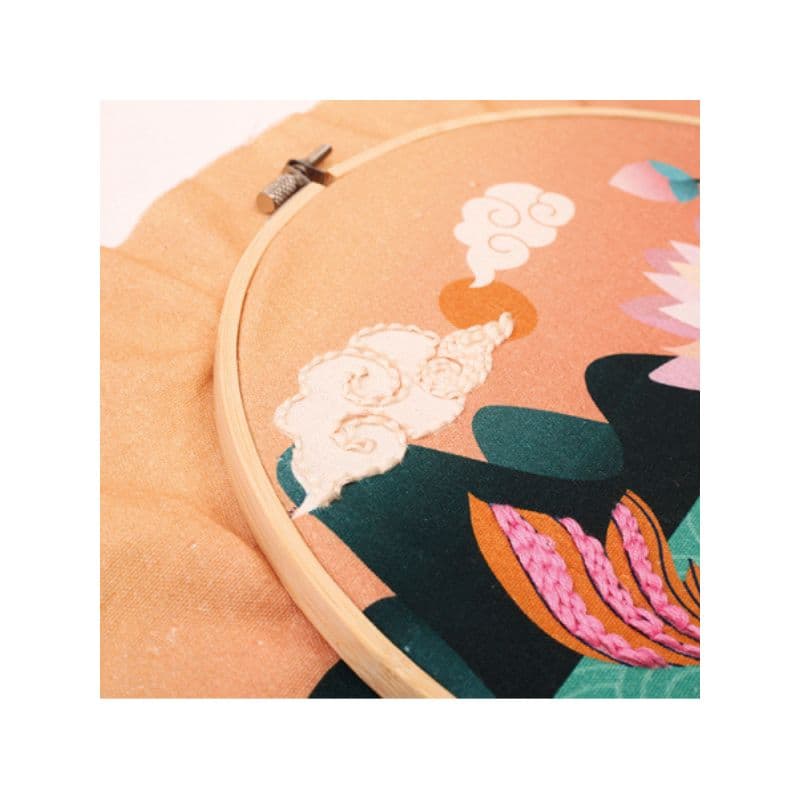
Our kits split into two camps here, and no box cover says so plainly.
The Graine Créative kits give you pre-printed polyester. The Rico kit gives you monk's cloth — cotton, blank.
Printed cloth
The design is there, in colour, with its areas marked out. You follow, you fill. The first piece looks like the photo, which counts for something when you doubt you can do it.
The trade: what you make is decided. A printed cloth serves once, for one design, and polyester doesn't behave like cotton — it slips more under the point and forgives a misplaced hole less.
Monk's cloth
Loosely woven cotton, no design. You transfer your own with an erasable pen, or work freehand.
It's the reference cloth for punch needle, the one patterns assume. It has a quality you only measure by making mistakes: its threads close back up. An undone loop leaves no permanent hole — you scratch it with a fingernail and start again.
Which one to start with
Printed, if the aim is to finish something good-looking this weekend without deciding anything.
Monk's cloth, if the aim is to learn the craft. The second is slower at first and far cheaper after: a metre of monk's cloth makes several pieces, a printed cloth makes one.
Pre-printed cloth
one design, no decisions, reliable result
Monk's cloth
any design, repairs itself, reusable
Tension, either way
Whichever cloth, it must sound like a drum skin when you tap it. Slack cloth sinks under the point instead of being pierced, and no loop holds.
It's the one thing to check before each session, because cloth loosens as you work.